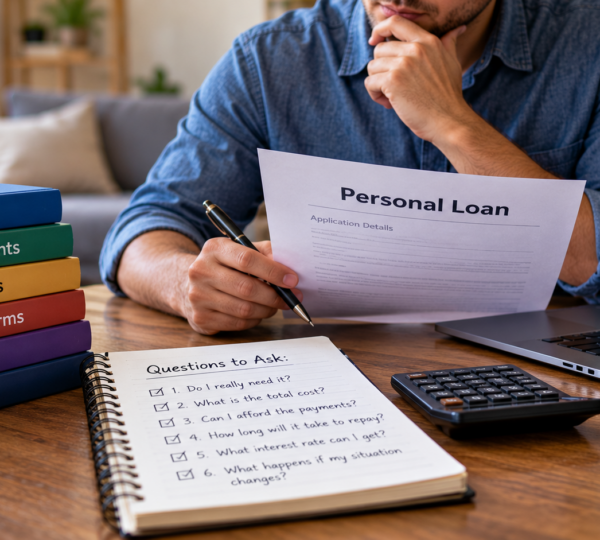
Managing money can be challenging when you have outstanding debt and little money set aside for emergencies. You may want to pay down your credit cards, personal loans, or other balances while also trying to build savings for unexpected expenses.
The difficult question is: Should you focus on paying off debt first or start building your savings?
The answer depends on your financial situation, interest rates, monthly expenses, and how much money you already have available. In many cases, working toward both goals at the same time can be a practical approach.
Here are six important considerations to help you decide where your money should go first.

1. Start by Understanding Your Financial Situation
Before deciding between saving and debt repayment, take a closer look at your overall finances.
List your monthly take-home income, essential expenses, outstanding debts, interest rates, and current savings. Include credit cards, personal loans, student loans, car payments, and other financial obligations.
This simple overview can help you understand how much money is available after covering your essential expenses.
For example, if you earn $4,000 per month after taxes and spend $3,200 on essential expenses and required payments, you have approximately $800 remaining for additional savings, debt repayment, and discretionary spending.
Knowing these numbers makes it easier to create a realistic plan instead of making financial decisions based on guesswork.
2. Build a Small Emergency Fund First
Even when you have outstanding debt, having some emergency savings can provide valuable financial protection.
Unexpected expenses such as car repairs, medical bills, or urgent home maintenance can happen without warning. Without savings, you may have to rely on credit cards or additional loans to cover these costs.
Consider building an initial emergency fund of $500 to $1,000, depending on your circumstances and what you can realistically afford.
You don’t necessarily need to reach this amount immediately. Start with smaller contributions, such as $10 or $25 each week, and gradually increase your savings when your budget allows.
Keep this money in an accessible savings account rather than investing it in assets that could lose value when you need to withdraw it.
Once you have a basic financial cushion, you can direct more of your available money toward reducing expensive debt.
3. Pay Attention to High-Interest Debt
Not all debt costs the same amount. Credit cards and certain personal loans may carry significantly higher interest rates than other forms of borrowing.
When interest charges are high, carrying a balance for a long period can make it more difficult to improve your financial position.
For example, imagine you have a credit card balance of $3,000 with an annual percentage rate (APR) of 24%. Interest can accumulate quickly if you make only minimum payments.
After establishing a small emergency reserve, consider directing additional money toward your highest-interest debt while continuing to make the required payments on your other accounts.
This strategy is commonly known as the debt avalanche method. It can help reduce the total interest you pay over time, although the results depend on your balances, rates, and payment amounts.
4. Choose a Debt Repayment Strategy That Works for You
Having a clear repayment strategy can make debt management easier and help you stay motivated.
Two commonly used approaches are the debt avalanche method and the debt snowball method.
Debt Avalanche Method: Make the required minimum payments on all debts and put extra money toward the balance with the highest interest rate. Once that debt is paid off, move to the next highest-interest balance.
Debt Snowball Method: Make the required minimum payments on all debts and focus extra money on the smallest outstanding balance first. After clearing it, move to the next smallest balance.
The avalanche method can reduce interest costs, while the snowball method may provide a stronger sense of progress by helping you eliminate smaller debts sooner.
Choose the approach that fits your financial situation and that you can maintain consistently.
5. Find a Balance Between Saving and Repaying Debt
You don’t always have to choose just one financial goal. Depending on your income and expenses, you may be able to save and repay debt at the same time.
For example, imagine you have $400 available each month after covering your essential expenses and minimum debt payments.
You might allocate $100 toward emergency savings and $300 toward additional credit card payments. Once your emergency fund reaches a comfortable initial target, you could redirect more of that $400 toward debt repayment.
If you have very high-interest debt, it may make sense to prioritize repayment after building a basic emergency reserve. If your debt has a relatively low interest rate and your savings are limited, contributing more toward savings may be reasonable.
The important thing is to avoid taking on new expensive debt while trying to build your financial safety net.
6. Work Toward Long-Term Financial Stability
Once high-interest debt is under control and you have some emergency savings, you can focus on strengthening your finances further.
A common longer-term emergency fund goal is three to six months of essential living expenses. The right amount depends on factors such as job stability, household responsibilities, and income predictability.
You can also begin working toward other financial goals, including retirement savings, education expenses, and major future purchases.
If your employer offers a retirement plan with matching contributions, review the terms carefully. Depending on your circumstances, contributing enough to receive the available match may be worth considering even while managing debt.
Review your budget regularly and adjust your savings and repayment goals whenever your income or expenses change.
Final Thoughts
Deciding whether to pay off debt or build savings doesn’t have to be an all-or-nothing choice. For many households, starting with a small emergency fund, prioritizing high-interest debt, and gradually increasing savings can provide a balanced approach.
Take time to understand your interest rates, review your monthly expenses, and choose a repayment strategy that fits your circumstances.
Remember that financial progress doesn’t happen overnight. Consistent payments, thoughtful spending, and regular savings contributions can gradually improve your financial position.
The best financial plan is one that helps you reduce debt, prepare for unexpected expenses, and build greater financial confidence over time.