
This year, many drivers had reason to believe that their vehicle insurance prices would fall. After huge insurance firms performed well in 2024, it appeared that premiums could finally start to fall. However, tariffs have hampered economic growth due to a new challenge.
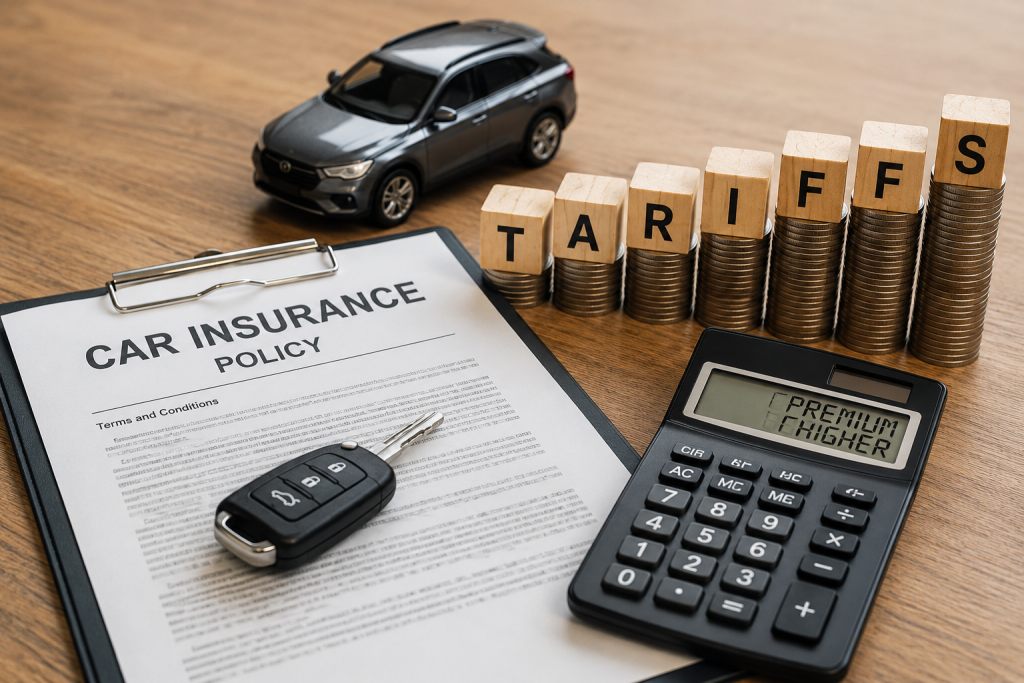
Following a highly prosperous year, insurers were preparing to decrease premiums. However, that scheme has failed. Price cuts have been paused due to uncertainty about additional levies on vehicles and auto parts. Car insurance premiums do not appear to be coming down anytime soon.
What did 2024 do to make lower prices possible?
Last year, auto insurance firms experienced a significant change in fortunes. Insurance firms raised premiums significantly amid a difficult period following the pandemic, when inflation and rising repair costs caused considerable damage. It paid off to do so. According to S&P Global Market Intelligence, the industry’s net combined ratio, which compares claims to premiums, reached its highest level in more than a decade in 2024.
People expected the market to become more competitive as they made money, and insurers would lower their rates to attract more customers. That was beginning to happen for a short time. In March, insurance companies from several states submitted 482 requests to cut personal automobile insurance premiums.
Tariffs affect the picture.
In April, everything changed quickly. The Swiss Re Institute reports that only 95 requests for reducing vehicle insurance prices were made that month. And requests to hike rates remained higher than requests to cut them.
The Swiss Re Institute’s economists stated that “insurers have mostly held off on requests for meaningful rate cuts since their new rates were announced.”
People are concerned because they don’t know where taxes will hit or how much of an impact they will have. According to the American Property Casualty Insurance Association, personal auto insurance claims may increase by $31 billion to $61 billion in only one year if the Trump administration’s proposed reciprocal tariffs are implemented. These taxes would apply to imports from China, Mexico, and Canada, as well as to some vehicle parts.
Insurance firms are in a bad place due to the potential increase in claims expenses. Most vehicle insurance plans are locked in for six to twelve months, and many jurisdictions require firms to obtain authorisation before changing costs. If claims increase during the course of a contract, insurers may be required to pay the additional costs.
Why State Rules Are Important
Each state’s leaders take into account not just anticipated rate increases, but also recommended rate decreases. The market may not be stable if businesses cut prices too quickly to attract new customers, only to end up losing money. This makes officials wary.
S&P Global Market Intelligence’s Tim Zawacki stated, “There’s a lot of caution right now.” Companies are cautious about how far they are willing to lower rates, if at all.
Insurers respond with caution.
Progressive is a significant auto insurance company, and its total ratio for the first quarter of 2025 was 86%. This is a little lower than the same time last year. The number of current personal lines policies increased by 18% from one year to the next. Even though the company was expanding swiftly, it was concerned that tariffs would cause claims costs to rise more than projected.
WHAT PEOPLE AND INSURERS SHOULD DO NEXT
Frolopiaton Palm is entirely free to use. Uncertainty surrounding tariffs is making car insurers cautious to set prices, even when they are profitable.
Without a question, the car insurance market is stalled. Tariffs have significantly reduced predictability. Even though insurers are profitable, they are hesitant to make significant pricing changes.
For drivers, this implies that vehicle insurance prices may not be as low as many had thought. Instead, they may remain constant or even rise slightly, depending on how the tariff situation unfolds.
Early 2025 data suggested insurers may be poised for a comeback. Tariffs and other external economic pressures, on the other hand, demonstrate that the industry’s pricing is determined not only by past performance, but also by what lies ahead.
WHY IS THIS IMPORTANT FOR POLICEHOLDERS?
It is not simply about the price associated with auto insurance. It also concerns how risk is quantified and priced. Furthermore, the possibility of maintenance and replacement prices rising due to tariffs is extremely real right now.
People shopping for new coverage or renewing an existing one should pay close attention to how insurers respond in the coming months. Even while rate increases aren’t coming as quickly as expected, insurers are monitoring every economic indicator and are prepared to shift gears if necessary.