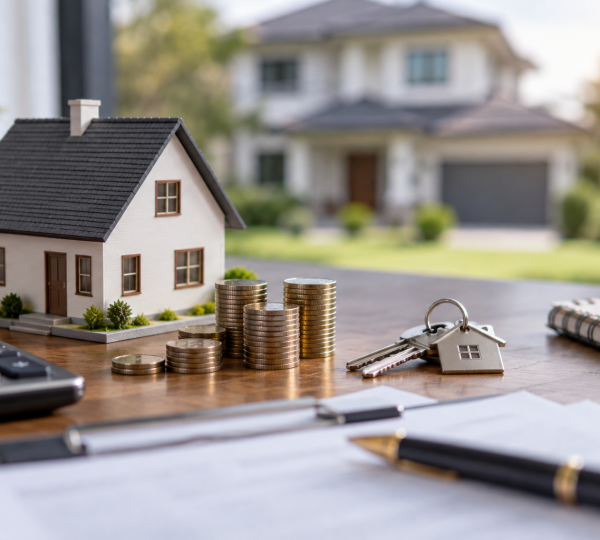
Deciding whether to rent or buy a home is one of the biggest financial choices many people will make. Owning a home can offer stability, greater control over your living space, and the opportunity to build equity. Renting, meanwhile, may provide flexibility, fewer maintenance responsibilities, and lower upfront costs.
But which option makes more financial sense? The answer depends on more than comparing monthly rent with a mortgage payment. Your income, savings, local housing market, lifestyle, and future plans all play important roles.
This guide explains the true costs of renting and buying, the financial trade-offs to consider, and practical ways to make a housing decision that supports your long-term goals.
1. Understand the Real Cost of Renting
Renting is often viewed as the simpler housing option because tenants generally pay a predictable monthly amount and do not directly cover major property repairs. However, the full cost of renting extends beyond the advertised monthly payment.
Typical rental expenses may include:

- Monthly rent payments
- Security deposits and application fees
- Renter’s insurance
- Utilities not included in the lease
- Parking, pet, or amenity fees
- Moving expenses when changing residences
Renters also face the possibility of rent increases when leases renew, depending on local regulations and market conditions.
For example, an apartment renting for $1,800 per month costs $21,600 annually before utilities and other expenses. If rent increases by 3% annually, the monthly payment would rise to approximately $2,087 after five increases.
Although renters generally do not build property equity through their payments, they may have more money available for savings, investments, or other financial priorities.
2. Calculate the Full Cost of Homeownership
Buying a home involves more expenses than the purchase price or monthly mortgage payment. First-time buyers sometimes underestimate these additional costs when deciding how much house they can afford.
Common homeownership expenses include:
- Down payment: The amount paid upfront toward the purchase price.
- Mortgage principal and interest: Payments toward the loan balance and borrowing costs.
- Property taxes: Local taxes that vary by location and assessed property value.
- Homeowners insurance: Coverage for qualifying damage and liability risks.
- Maintenance and repairs: Expenses for appliances, roofing, plumbing, heating, and other systems.
- HOA fees: Additional charges for properties within certain homeowners associations.
- Mortgage insurance: A possible expense when the down payment is below certain thresholds.
Closing costs also add to the initial expense of purchasing a property. These may include lender fees, title services, appraisal charges, and other transaction expenses.
A realistic homeownership budget should account for all these costs rather than focusing only on the advertised mortgage payment.
3. Compare Monthly Rent With Total Mortgage Costs
One of the most common mistakes when comparing renting and buying is treating the mortgage payment as the only monthly ownership expense.
Consider a hypothetical $350,000 home purchased with a 10% down payment and a 30-year fixed-rate mortgage at 6.5% interest.
The mortgage loan would be $315,000, producing an estimated principal-and-interest payment of approximately $1,991 per month.
However, the monthly ownership budget could look like this:
- Mortgage principal and interest: $1,991
- Property taxes: $350
- Homeowners insurance: $150
- Maintenance reserve: $290
- Mortgage insurance: $125
Estimated total monthly ownership budget: $2,906.
These figures are illustrative rather than current loan quotes. Actual taxes, insurance premiums, mortgage insurance, and maintenance expenses can differ significantly.
If a comparable property rents for $2,200 per month, buying would require approximately $706 more in this example’s monthly budget.
However, part of the mortgage payment reduces the loan balance and gradually builds equity. That distinction matters when comparing the longer-term financial outcomes.
4. Consider How Long You Plan to Stay
The length of time you expect to live in a property can strongly influence whether buying makes financial sense.
Purchasing a home typically involves significant upfront transaction costs. Selling later can introduce additional expenses, including agent commissions, moving costs, and potential repairs.
If you expect to relocate within two or three years, renting may be more practical because you can avoid some of the financial risks associated with buying and selling over a short period.
Buying may become more attractive when you expect to remain in the same location for several years, although there is no universal break-even timeline.
Property appreciation, mortgage interest rates, maintenance expenses, transaction costs, and local rental prices all affect how long ownership must last before it becomes financially advantageous.
5. Think About Your Down Payment and Emergency Savings
Saving for a down payment is an important part of preparing to purchase a home. Although some mortgage programs allow eligible buyers to put down less than 20%, a smaller down payment can mean higher borrowing costs or additional mortgage insurance.
For a $350,000 property, a 10% down payment would require $35,000 before closing costs and other expenses.
It is important not to use every available dollar to complete the purchase.
Homeowners should also maintain emergency savings for unexpected repairs, temporary income interruptions, and other financial setbacks.
Before purchasing, consider whether you can comfortably afford:
- The required down payment
- Closing costs and moving expenses
- An emergency savings cushion
- Regular mortgage and ownership payments
- Potential major home repairs
If buying would leave you with little or no financial flexibility, continuing to rent while strengthening your savings may be a reasonable decision.
6. Understand Home Equity and Its Limitations
One of the primary financial benefits of homeownership is the opportunity to build equity.
Home equity represents the difference between a property’s market value and the outstanding debt secured by it.
For example, if a home is worth $400,000 and the remaining mortgage balance is $280,000, the homeowner has approximately $120,000 in equity.
Equity can increase as the mortgage balance decreases or the property’s value rises. However, home values can also decline, reducing equity and potentially making it difficult to sell without a financial loss.
Home equity is also not the same as accessible cash. Selling a property involves transaction expenses, while borrowing against equity generally introduces additional debt and repayment obligations.
For these reasons, a home should not automatically be treated as a guaranteed investment.
7. Consider the Financial Advantages of Renting
Renting can be financially beneficial in circumstances where flexibility and liquidity are especially valuable.
Renters generally avoid direct responsibility for major structural repairs and certain property ownership expenses. They may also find it easier to relocate for career opportunities, family needs, or lifestyle changes.
Another potential advantage is the opportunity to invest money that would otherwise be tied up in a down payment and other purchasing costs.
For example, someone who chooses to rent instead of buy might invest a portion of their savings in a diversified portfolio appropriate for their goals and risk tolerance.
Investment returns are never guaranteed, but the opportunity cost of tying substantial savings into a home purchase deserves consideration.
Renting is not necessarily wasted money. It provides housing and flexibility, just as mortgage interest, property taxes, insurance, and maintenance represent the ongoing costs of owning a home.
8. Evaluate Your Local Housing Market
Housing conditions vary significantly between cities, neighborhoods, and even nearby streets.
In some markets, monthly rent is considerably lower than the total cost of owning a comparable property. In others, ownership may be relatively competitive, especially for buyers with substantial down payments.
Before making a decision, research:
- Recent sale prices for comparable homes
- Rental prices for similar properties
- Available mortgage rates and loan terms
- Property tax levels
- Homeowners insurance costs
- Local inventory and housing demand
- Neighborhood amenities and commuting expenses
Try to compare properties with similar locations, sizes, conditions, and features. Comparing a small apartment’s rent with the mortgage on a large detached home will not produce a meaningful financial comparison.
Local market data can help you understand the trade-offs, but future housing price movements remain uncertain.
9. Use a Rent-versus-Buy Calculator
A rent-versus-buy calculator can help estimate the long-term financial differences between the two options.
Useful calculators consider more than monthly payments. They may include down payments, closing costs, mortgage interest, property appreciation, rent increases, maintenance, investment returns, and the expected length of ownership.
To make the comparison more realistic, test several scenarios rather than relying on a single forecast.
For example, compare outcomes under:
- Stable home prices
- Modest property appreciation
- A decline in property values
- Higher-than-expected maintenance expenses
- Different future rent increases
This approach helps reveal how sensitive your decision is to assumptions about the future.
10. Know When Renting May Be the Better Choice
Renting may be particularly attractive when your circumstances are likely to change.
It may make sense if you expect to move soon, are still building emergency savings, have uncertain income, or live in a market where purchasing is substantially more expensive than renting.
Renting may also appeal to people who prefer fewer property maintenance responsibilities or want to preserve savings for education, business opportunities, or retirement investing.
Choosing to rent does not necessarily mean delaying financial progress. The important consideration is how effectively you manage the money and flexibility available to you.
11. Know When Buying May Be the Better Choice
Buying may be appropriate when you have stable income, sufficient savings, manageable debt, and a strong expectation of remaining in the same area for several years.
Homeownership can provide more control over renovations, greater housing stability, and the possibility of building equity over time.
A fixed-rate mortgage can also provide predictable principal-and-interest payments, although property taxes, insurance, association fees, and maintenance expenses may still increase.
Buying is generally more financially sustainable when the total ownership costs fit comfortably within your budget without compromising other essential goals.
12. Make the Decision Based on Your Financial Goals
The most useful housing decision is one that aligns with both your finances and your lifestyle.
Before deciding, ask yourself a few practical questions:
- Can I comfortably afford the full cost of homeownership?
- Do I have adequate emergency savings after paying upfront costs?
- How long do I realistically expect to stay in this location?
- Would renting allow me to save or invest significantly more?
- Am I prepared for unexpected maintenance responsibilities?
- Does buying support my broader financial priorities?
Your answers may change over time. Renting can be the better choice during one stage of life, while buying may become more appropriate later.
Final Thoughts
Renting versus buying is not simply a question of whether paying a mortgage is better than paying rent. It is a comparison of costs, financial risks, lifestyle preferences, and long-term opportunities.
Homeownership can provide stability and the potential to build equity, but it also involves significant upfront expenses, ongoing maintenance, and exposure to property market fluctuations.
Renting offers flexibility and may preserve money for other priorities, although rent increases and limited control over the property can create challenges.
The best financial decision is the one you can comfortably sustain while continuing to save, manage debt, and work toward your long-term goals. Compare realistic costs, examine several future scenarios, and choose the option that fits your circumstances rather than assuming one is always superior.